Orbán’s system resembled an autocracy more than a democracy

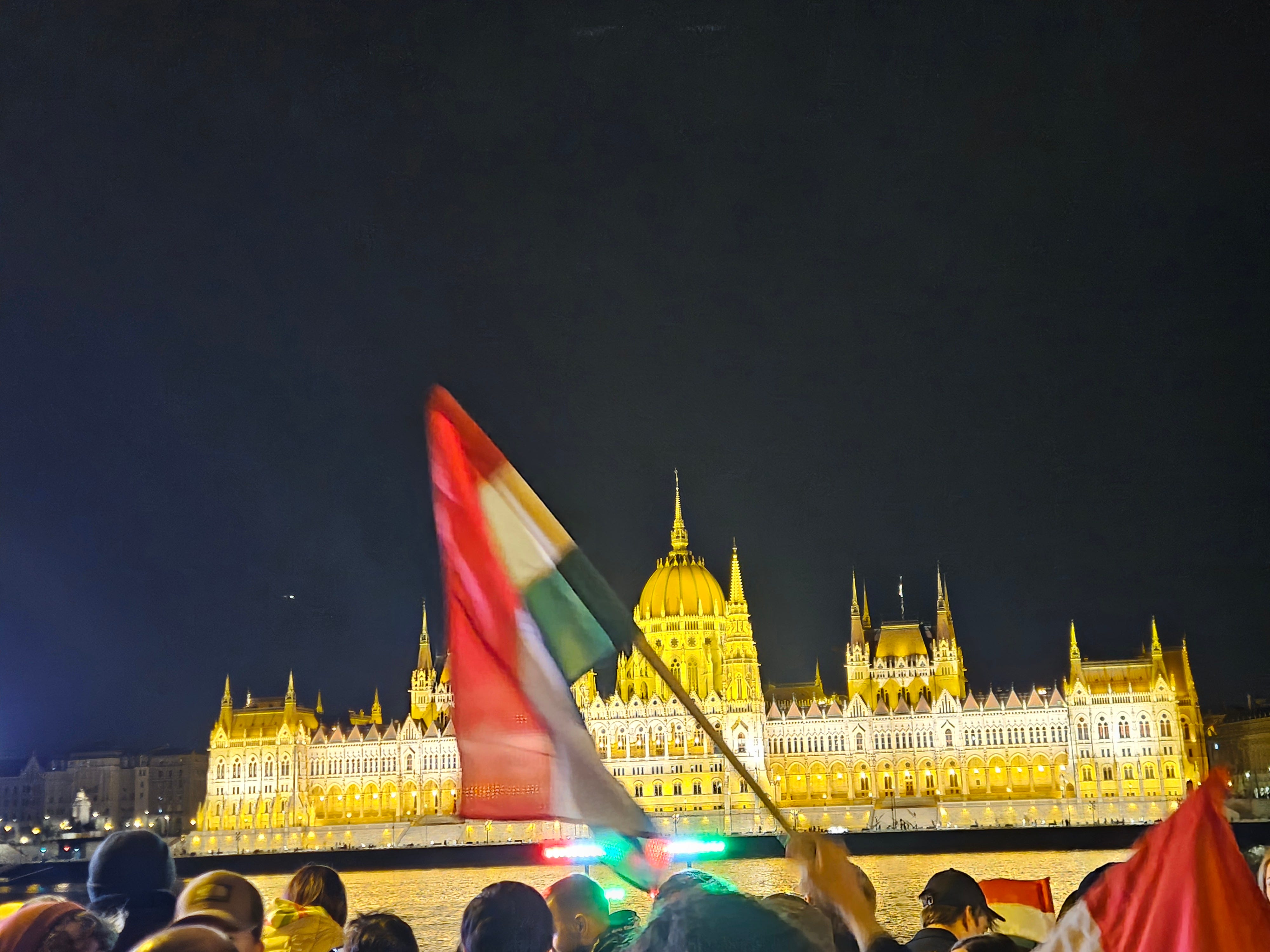
Following the election in Hungary, political scientists and other experts are questioning whether Hungary under Orbán constituted actually an autocracy. Since the elections brought about a change, they argue that Hungary under Orbán must have been a democracy. Those who argue in this way fail to recognise the reality of life in Orbán’s Hungary and ignore just how severely many people felt their freedoms were restricted.
Here are a few comments, which could be expanded upon, regarding this overly simplistic view.
1. Singling out one element of democracy – in this case, a change of power following an election – makes that element the sole determining factor and deliberately ignores, for ideological reasons, other factors that do not fit with a democracy but rather with an autocracy.
2. Hungary under Orbán was characterised by massive restrictions on freedom of the press, freedom of expression, freedom of assembly and freedom of speech.
3. Hungary under Orbán was characterised by a lack of protection for minorities.
4. Separation of powers, rule of law were limited.
5. There was an equating of the party with the state. State resources were used to conduct party propaganda. For instance, emails or text messages were regularly sent by government bodies to the people of Hungary that were pure FIDESZ party propaganda.
6. This conflation of state and party was also evident in the fact that, in Orbán’s Hungary, massive state pressure was exerted on individuals who either opposed the Orbán system or specific members of the ruling clan, or who were in competition with the business interests of individual clan members.
7. In doing so, the government or the state also used its power to cause massive harm to private individuals.
8. The courts did not, or were not allowed to, prosecute even the most obvious cases of corruption and the misuse of public funds.
9. There was vote-buying and blackmail by FIDESZ and local self-governing bodies to vote for FIDESZ.
10. The last Orbán government ruled primarily through government decrees rather than through laws enacted following parliamentary debate.
I shall leave aside the pervasive corruption, the audacity with which public funds were siphoned into private pockets, and the obscene display of the ruling clan’s wealth; but I would like to mention one further point.
Anyone who was out and about in Budapest on 12 July around Batthyány Square could almost grasp a sense of liberation. A weight has been lifted from many people. Many people, especially young people, no longer felt free in Orbán’s Hungary because their freedom was actually restricted; and that included conservative young people.
The younger generation in Hungary decided the election. Through social media, language skills and the fact that many of their peers have gone abroad, they have been able to access more and different sources of information than older generations. They know that in other countries the standard of living is higher and everyday freedom greater than in Hungary, that societies are less uniform and that this can be an advantage. They have recognised the daily lies of the Orbán government and the Orbán media in Hungary. They have seen that a select few are more equal than the rest of society and that these few can get away with anything.
The election was about fundamental issues: will the authoritarian state and the authoritarian, strictly hierarchical social order be further expanded, or will there be an open, pluralistic society that accepts those who think differently as Hungarians and does not defame them?
Can the people of Hungary trust in themselves under new leadership; will society be empowered to determine for itself what policies are made in Hungary and how society is constituted? Or will they continue – as they have for the past 16 years – to follow a father figure who authoritatively decides which policies are good for the people of Hungary and, moreover, dictates what they must think and believe in order to be true Hungarians and belong to Hungarian society?
The Hungarians have decided: Against autocracy. For democracy!
See more https://stephanmueller.substack.com/p/fatherless-youth-are-the-hope
P.S. There is little point in applying theories developed in the past 1:1 to societies that are subject to dynamic processes. Theories must take these social developments into account and thus adapt to reality. To put it bluntly: the theory of Athenian democracy espoused by Cleisthenes or Pericles, in which, for example, women were excluded from participation, no longer corresponds to the theory of our modern democracy (at least for most people).